Elvis Arafat: Report from Sweden

Fotolia_Stockholm-old-town-4-Copy.jpg

A little while ago Argos, our European-African traveler, visited Stockholm Sweden for four days.

(See here his reports from Belgium and Jordan).

Argos, mind you, is of conservative persuasions, and the Scandinavian fling with socialism does not suit him. And yet he found it hard to deny that Stockholm had it going on: “It was maybe the most beautiful city I’ve been to.” Despite the absence of mountains (something Argos has always loved), the water was gloriously clear, the buildings magnificent, the streets clean, and the people gorgeous, which probably had something to do with the fact that, wherever he looked, he saw Swedes running, biking, and walking. Continue reading

A Jew, An Arab, And A White Guy Walk Into A Bar

ALost_in_harem.jpg

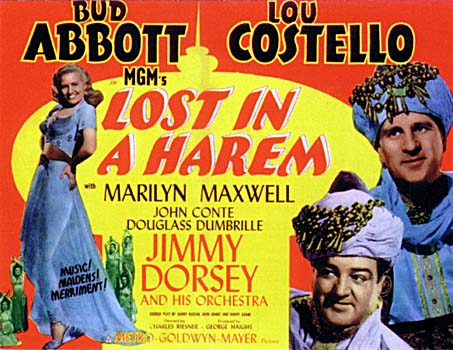
I have three rules for my classes: 1) Come to class. 2) Come to class on time. 3) Come to class prepared (do the work and bring a notebook and writing utensil). Most of the time my students comply.

The other day two Russians raised their hands and in unison asked for pencil and paper. I’m usually an easygoing teacher, but when given the opportunity (i.e. breaking one of my three rules), I ream my students out, and that’s what I did: “I wake up every morning at 6:20 so I can be here on time to teach you! And when I show up, I’m prepared! Show some respect, and show up prepared yourself! Bring your own stinking pencils to class! And, no, I’m not giving you a pencil! Find one yourself!” I never yell, and I’m not mean, but students get the point. In this instance, the Russian students begin inquiring around while I fired up the powerpoint.

I said “Russian” but really what I meant was an ethnic Korean raised in Kazakhstan, and a Tatar, who were both native Russian speakers. (Its easy to forget that Russian influence and culture is bigger than Russia proper.) After a minute of searching, the Korean, Kazakhstani Russian speaker raised his hand, and upon acknowledgment asked, “Mr. Bellewether, are you Jewish.” Confused, I answered in the negative. “Why?” I asked in clarification. A come-on-you’re-not-stupid look spread across his face and he responded: “Paper, pencil…so cheap.”

Speechless I covered my mouth with the papers and stifled a laugh.

Continue reading

America’s Foreign Policy: The Good, The Bad, And The Ugly


THE-GOOD-THE-BAD-BILLY-PERKINS.jpg

“The people who want government’s head to be in the clouds should remember that its feet are mired, understandably but inevitably, in the clay” (George F. Kennan, Around the Cragged Hill, 54-55). 

I am not sure if Kennan ever read the Kybalion, but as Yath00m likes to put it, “The stars will always kiss the feet.” Lofty, ethical ambitions have a place in foreign affairs, but Kennan, the father of America’s Cold War strategy, sees that policymakers by necessity trudge through mud. It is for this reason he writes:

[G]overnment, while worthy of respect, should not be idealized…Its task…is largely to see to it that the ignoble ones are kept under restraint and not permitted to go too far…Its doings are something that should be viewed by the outsider only with a sigh for its unquestionable necessity, and by the participant only with a prayer for forgiveness for the many moral ambiguities it requires him to accept and for the distortions of personality it inflicts upon him.

—Kennan, Around the Cragged Hill, 54, 58. 

This idea of necessity will return.

The Good, The Bad, And The Ugly

Walter McDougall writes in his book Promised Land, Crusader State: The American Encounter with the World Since 1777 that American foreign policy can be understood through the lens of Sergio Leone’s classic The Good, The Bad, And The Ugly. While the left emphasizes The Bad (the slaughter of native Americans, enslavement of Africans, a predatory war against Mexico, the interment and nuking of the Japanese, and economic imperialism [so called]), the right emphasizes the The Good (FDR’s Atlantic Charter, the defeat of heinous regimes in Germany and Japan, and victory over Soviet tyranny). Those who see America as The Bad tend to believe that America ought to flagellate itself for past crimes.  Advocates of America The Good tend to advocate their country’s forceful moral leadership of “the free world” (see George W. Bush and almost the entirety of the current Republican presidential candidates).

Continue reading

Donald v. Adolf

trump-is-hitler1.jpg


The only thing more ignorant than a Trump supporter who thinks that the man will single-handedly make America great again, is the Trump hater who thinks he is the new incarnation of Adolf Hitler. Hitler, he is not. Weimar Germany, America is not. And not by a long shot. Similarities certainly exist. For instance, both Hitler and Trump have two arms, two legs, a head, and hair (albeit Hitler had a better idea of how to part his locks). A cursory (not superficial) glance at history and the present highlights the simple-minded mentality that propagates such sophomoric comparisons.

There are two things that should be considered. First, a comparison of Hitler and Trump’s ideas. Second, a comparison of their respective political contexts. Upon reflection, the Hitler-Trump memes are absurd. The main culprit I think is how much people have forgotten about Hitler. He has become a caricature, a trope that has been used and abused and laden with nicknacks from all the strawman hobbyhorses he has been nailed to. He is simply the monster without form or essence. The problem here is not merely an academic one. If you misdiagnose the problem, you will never get around to orchestrating a thoughtful response to the Trump phenomenon.

Continue reading

On War: The West vs. the Rest

b-17s_in_formation_-_national_archives_and_record_administration_342-fh-3a20906.jpg
Recently, before the start of class, one of my bright faced Taiwanese students waved me over. “Teacher,” she said, “My friend sent me this ISIS video. You should watch it!” We had discussed ISIS in class, and so, not wanting to squash my student’s growing interest in world affairs, I acquiesced. Plus the clip was only 41 seconds long.

I am not posting said clip. It is simply too grotesque. A prisoner with bound legs and clad in an orange jump suit is seen for a a second or two trying to hop out of the way of a tank. The tank catches the wretch and rolls over him longways. The camera then does a close up survey of the carnage. The most notable image: the flattened mass that used to be the victim’s head.

The video was hardly more outrageous than any of the other killings perpetrated by ISIS. But newspaper reports, the printed word, have a way of concealing even as they reveals. Witnessing someone turned into a red pulp is not quite the same as reading about it. In those brief seconds you viscerally and vicariously experience the terror of the imminent end, the obliteration itself, and the remains—all in 41 second.

Continue reading

Elvis Arafat: Report from Jordan

Amman, Jordan

Amman, Jordan

Argos just returned from some wanderings in Jordan, Sweden, and Hungary. This report focuses on his first stop: Jordan and its neighbors.

Two things:

First, a quick refresher. Argos has a new job in which he jets about the globe as an adviser to his organization’s regional leaders and gathers information for corporate. Whenever he gets back stateside he gives me a call to share his observations. His first trip took him to Belgium. 

Second, a caveat: these write-ups are anecdotal but hopefully insightful.
Continue reading

The New Cultural Imperialism: America in Africa

There has always been a certain dissonance at play with America’s response to imperialism.  While the United States routinely criticized European power land grabs around the world during the 19th and 20th century, as long as Europe stayed out of the Western hemisphere, Americans did not meddle. With the coming of the Cold War, however, America found itself awkwardly confronted by a necessity: while they rejected imperialism they also feared the expansion of communism. Consequently, the liberation of European colonies, while desirable at the level of principle, proved practically difficult as many were ripe for communist intervention. National security and national principles existed in an uneasy tension.

In the aftermath of that dicey and often contradictory time, it remains fashionable among members of the left to excoriate European imperialism and America’s complicity with it. The irony is that left wing attacks upon America’s past actions miss the fact that the left itself propagates a cultural imperialism in the developing world.

Continue reading

Elvis Arafat : Report from Belgium

Inline image 1

Years ago I walked into a Palestinian barbershop in the Old City of Jerusalem and came across pictures of Yasser Arafat and Elvis pinned to the same wall—a terrorist-freedom fighter and an American rockstar.

Travelling has a way of jolting assumptions and categories and lending perspective to global situations often processed for us by the mainstream media.

So I’d like to introduce a friend that has agreed to share his travelogue with us. We’ll call him Argos.

Argos has a new job in which he jets about the globe as an adviser to his organization’s regional leaders and gathers information for corporate. It’s a sweet gig if you can handle the flying.

Whenever he gets back stateside he’s going to give me a call to share his observations and some of the conversations he had with the locals about politics and culture. Consequently, this will be a reoccurring column at feralyawp. That said, while we’re well aware that Argos’ insights are anecdotal, they are nevertheless suggestive and possibly insightful.

Argos first trip took him to Belgium.

Continue reading